Christian Mysticism. The Inner life
With, Addendum to Madame de La Mothe’s writing on interior prayer or meditation.
By Madame Bouviere de la Mothe Guyon.
Translation from French to German with remarks by Franz Hartmann, M.D.[1]
Translation from German to English by Robert Hutwohl[2]
This document incorporates live notes. Click on a superscripted endnote number in the text to jump to its corresponding endnote; click on the superscripted endnote numeral in the endnotes to return to the original text reference.
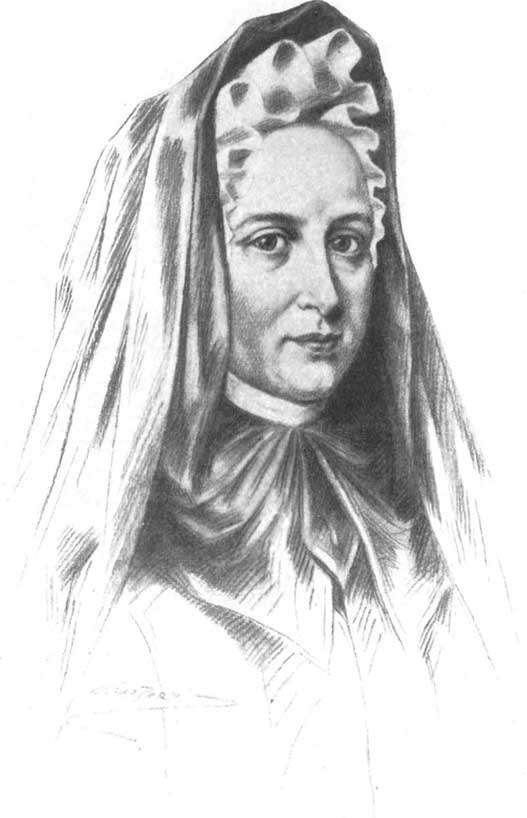
Jeanne Marie Bouvier de la Motte Guyon
(Born: April 13 1648 Montargis, Orléanais–Died June 9, 1717 Blois, France)
Notes by the Translator – Robert Hutwohl
Madame Guyon’s work, “Christian Mysticism. The Inner Life,” emphasizes the importance of inner spiritual life and self-knowledge. She argues that true knowledge of God comes from within, not from external sources, and that heartfelt prayer is accessible to all, regardless of education or status. The book guides readers on how to pray from the heart, using contemplation and reading as tools to deepen their connection with God.
The translator, Robert Hutwohl, has referred readers to read two articles located at his page on academia.edu and spiritofthesunpublication.com: On the Impersonal God, Supreme Deity in the Universe and Man, See my two articles by Geoffrey Hodson:
“Some Theosophical Ideas Concerning God, Religion and Ethics.” Geoffrey Hodson. The Theosophist 76 (October 1954), 13-17.
And:
“The Supreme Deity in the Universe and Man.” Geoffrey Hodson. The Theosophist 94 (February 1973), 289-300.
The text emphasizes the importance of contemplative prayer, focusing on the presence of God within oneself. It suggests that beginners should gather their senses inward, contemplate God’s presence, and allow their emotions to rest peacefully. The text also addresses those who cannot read, encouraging them to pray contemplatively using the Lord’s Prayer and focusing on God’s attributes.
The text emphasizes the importance of surrendering oneself completely to God, accepting His will, and finding solace in suffering. It highlights that true virtue stems from an inward connection with God, leading to a natural practice of virtues and a desire for suffering to please Him. The text also underscores the significance of mortification, achieved internally through God’s grace, rather than externally imposed practices.
True conversion requires turning inward to God, away from external distractions and the influence of the senses. This inward focus, aided by God’s grace, leads to a natural and habitual turning towards God, distancing the soul from sin. As the soul progresses, it experiences a profound sense of rest and love, ultimately leading to a state of infused prayer where God’s action surpasses the soul’s own efforts.
The soul, through prayer, achieves a state of rest and intimacy with God, experiencing infused prayer and a profound sense of happiness. This state of inner silence and solitude allows the soul to receive God’s Word and love, leading to a natural flow of virtues and a detachment from evil. God guides the soul’s examination of conscience, confession, and communion, revealing faults and granting forgiveness through His grace.
The text emphasizes the importance of interior silence and surrender to God in prayer. It encourages the soul to abandon verbal prayers when drawn to silence, allowing the Holy Spirit to guide its devotion. The text also addresses distractions and temptations, advising to turn to God rather than confront them directly, and highlights the transformative power of self-annihilation and union with God through prayer.
The soul’s most noble action is achieved through complete surrender to the Spirit of God, allowing divine inspiration to guide its actions. This surrender, akin to Mary’s at Jesus’ feet, enables the soul to become one with God, experiencing divine sonship and freedom. By relinquishing self-effort and embracing God’s will, the soul achieves unity and simplicity, fulfilling its ultimate purpose.
The text emphasizes the importance of internal, continuous action in the soul’s relationship with God. It compares this to a ship sailing with the wind, where the soul, guided by the divine Spirit, progresses effortlessly. The text also highlights the need for patience and trust in God during challenging times, likening it to anchoring a ship during a storm.
The text emphasizes the importance of guiding souls towards a deep, heartfelt connection with God, rather than focusing solely on external religious practices. It argues that this inner life, centered on love and simplicity, is the key to true transformation and spiritual growth. The author urges spiritual directors to lead their flock towards this path, highlighting the dangers of neglecting the heart and the potential for lasting conversions through genuine prayer and devotion.
God purifies souls through wisdom, much like gold is purified through fire. This purification process involves removing earthly and carnal elements, making the soul more like God. While this process may be painful and require surrender, it is ultimately beneficial and leads to union with God, which is the ultimate goal of human existence.
Christian Mysticism. The Inner life
Preliminary remarks, Chapters I.-IX.
By Madame Bouviere de la Mothe Guyon
With remarks by Franz Hartmann, M.D.[3]
Translation from the French by Dr. Hartmann.
Translation from German by Robert Hutwohl
Preliminary remarks.
There is a peculiarity about books that deal with the inner spiritual-divine life. Those in whom this inner life has awakened have no need of these books, and those in whom it has not become conscious do not understand them. Consequently, such writings might well remain unwritten, were it not for a third class, namely those in whom this inner life stirs and who feel in their hearts the urge to know the truth. For them, such books can be a means of paving the way outward for the divine light hidden within them, so that it can be revealed to them and illuminate their path to perfection.
The knowledge of God that springs from this inner enlightenment is Theosophy, and without this inner knowledge, all theological study has at most a scientific and theoretical, but no practical, value. True Self-knowledge is vastly different from pious enthusiasm that seeks external things; the latter leads to nothing, because what is within can only be found within. The works of Madame Guyon are not the products of enthusiasm, but of the revelation of truth within, and her teaching, which is identical with the teaching of all enlightened beings, can be summarized in the following words:
“Seek nothing outside God, but everything in him, and you will find yourself and everything in him; but do not seek God outside yourself, but within yourself. Whoever finds himself in God finds God in himself.”
This Self-knowledge of the eternal is incomparably more valuable than all transient knowledge; therefore, the preface[4] to Madame Guyon’s work states:
“So great and zealous are efforts being made to educate both youth and the people that one should expect that human society will soon be completely and comprehensively educated, reaching a pinnacle of enlightenment never before attained. The refinement and improvement of morals and the arts are always beneficial if their goal is God. Christianity has never despised solid science; on the contrary, only through it has it been preserved and spread. But if man were only perfected and educated externally, animated only by the spirit of the world, then the highly praised enlightenment would not be able to rise so high; the lowest level would be its place, and the true Christian will never tolerate it within himself. As refined paganism,[5] he will close his heart and soul, mind and heart, and instead devote his entire spiritual energy to that which truly makes him happy and blessed here and beyond.”
“So to you, pious, true Christian! Whoever you may be, we hand over this instruction on heartfelt and faith-based prayer. It is for you who want to learn to speak cordially and childlike with God, your Father, and with Jesus Christ, your Savior, to walk and live in his company or presence, to love him with all your heart, with reckless or pure, unselfish love, to obey him perfectly, out of love, and not out of fear or compulsion. If your soul is childlike and simple, you will soon recognize that such writing was only inspired by the Spirit of God; For self-willed, proud, haughty, and conceited wise men and scholars never recognize or see them. It is not for nothing that Jesus Christ prayed: “Father, I thank you that you have hidden these mysteries from the wise and learned, but revealed them to the simple.”
Nowadays, when the word “Theosophy” is on everyone’s lips, bookishness and book learning are often confused with true knowledge of God. We therefore propose to all those who seriously strive for Self-knowledge an excerpt from the writings of Madame Guyon, which teaches how this knowledge is to be found. We recommend that anyone who wishes to study them always remember that they do not deal with external and distant things, but with that inner life which each person can find only within themselves.
On the Worship of God in Spirit and Truth.
Chapter I.
All are called to prayer from the heart, and with the sufficient grace given to each person, all people can offer this prayer, thus using this great means of salvation, which can be used at any time and even by the simplest of people.
- Everyone can certainly pray, and it is a surprising misfortune that almost everyone deceives themselves into thinking they are not called to heartfelt prayer. As we are all called to salvation, so we too are called to prayer.
Prayer is nothing other than an inclination of the heart toward God and an inner exercise of love. St. Paul commands us (1 Thessalonians V, 17) to pray without ceasing. Our Lord said (Mark XIII, 33, 37): “I say to you all, watch and pray!” Therefore, all can and must pray from the heart.
I will admit that not everyone can contemplate, but that only very few have the ability to do so; but God does not require this of everyone, nor do we require it.
- Dearest friends, whoever you may be, if you strive for salvation, come all to pray this prayer. For you must live by prayer, just as you should live by love. (Rev. III, 8) I advise you to buy from me gold refined in the fire, in order to enrich yourselves.
It is very easy, indeed far easier, to obtain this gold than you would imagine from afar.
All you who are thirsty, come to this living water (Rev. XXII, 17) and do not take pleasure in digging useless sod wells that cannot hold water. Come, you hungry hearts, who have not yet found anything that could satisfy you, you shall be abundantly satisfied. Come, you afflicted souls, tormented with toil and longing, and you will be relieved. Come, all you sick, to your physician; do not fear him because you are so completely ill; simply reveal your ailment to him, and he will cure you of it.
Come, children, to your Father! He will embrace you with the arms of love. Come, all you poor lost sheep, draw near to your Shepherd. All you sinners, come to your Savior and Redeemer. All you ignorant, unlearned people, even if you think you are not capable or fit for prayer, you nevertheless are, you, the very first and the very best.
All of you, without exception, come! Jesus Christ is calling you all.
Heartless people may well stay outside; they are excused, for without a heart no one is capable of love. But are there really people without a heart? So come, all of you, and give your heart to God, and learn here how to do it.
- Whoever wishes to pray the prayer of the heart can do so easily with the help of ordinary grace and the gift of the Holy Spirit, which are given to all Christians.
Prayer is the key to perfection and supreme happiness; it is the infallible means of freeing us from all vices and acquiring all virtues within ourselves, for the great path to perfection is the unceasing walk in the presence of God. He Himself tells us (Genesis XXII, 1): “Walk in my presence, that you may be perfect.” Prayer alone can provide you with this presence uninterruptedly, without ceasing.
- You must therefore be taught a way of praying which can be used at all times, regardless of external occupations; applicable by and for kings, princes, prelates, priests, magistrates, soldiers, children, artists, peasants, women, and the sick.
But this way of praying is not a matter of the head, but of the heart.
It is not a prayer of reflection, because the human mind is so limited that when it thinks of one thing, it cannot think of another at the same time; but it is a prayer of the heart, which cannot be disturbed by any occupation of the mind.
The prayer of the heart can only be disturbed by disordered inclinations. But once one has tasted God and the sweetness of his love, it is no longer possible to taste anything other than him.
- Nothing is easier than to have and taste God; he is more within us than we ourselves. He demands to give himself to us far more quickly than we desire to possess him. It all depends on the way one seeks him, and this is far easier and more natural than even breathing air.
Yes, you! You who are so crude and uneducated, you believe yourself incapable of anything of this kind, and yet you can live from prayer and from God Himself as easily and steadily as from the air you breathe. Wouldn’t you really be very wicked if you didn’t want to do it! Oh! Now learn the way—the easiest way in the world—that leads you there, and you will most certainly do it.
Chapter II.
First degree of prayer, practiced in two ways, namely, by reading and contemplation. Excellent ways and instructions for contemplation and the removal of obstacles.
- Souls can be introduced to prayer by two means, which can and should be used for a time. One is contemplation, the other is contemplated reading.
The reading under consideration consists of a few powerful truths, which one reflects on or perceives as an exercise; yet the latter is preferable to the former, and thus one should read. Take a truth of your own choosing, and then read two or three lines to digest and savor it. Strive to extract the juice, and linger on the passage you have read as long as you find it palatable, and do not depart from it until you find nothing more to savor and enjoy from that passage.
Afterwards, you must take the same number of lines again and proceed with them in the same way, but never read more than half a page at a time. It is not the amount of reading that is fruitful, but the right way of reading. Those who hurry too much gain as little as bees from flowers when they merely fly past them instead of perching on them and sucking the sap. Reading a lot is more a matter of shyness from school than a matter of mysticism; but to benefit from spiritual books, one must read this way, and I am assured that if one always proceeded in this way, one would gradually become accustomed to prayer through reading and be very well disposed to it.
- The second means is contemplation, which is carried out at the appointed hour, not at the time of the reading. It seems to me that one would do well to conduct oneself as follows: After placing oneself in God’s presence through an act of living faith, read something of essential content and dwell on it very gently, not reasoning, but rather in order to retain the spirit that dwells therein, always keeping in mind that the main thing must be God’s presence, and that the subject should be used more to retain the spirit than to reason.
Given this, I say, it is necessary that a living faith in the presence of God in the depths of our hearts should impel us to immerse ourselves powerfully in ourselves, and that this faith should turn all our senses inward and prevent all their outward excursions. This is truly a very effective means, especially at the outset, of being freed from a multitude of distractions, of distancing ourselves from external objects, and thereby of drawing near to God, who is now found in the very foundation and center of ourselves, which is the very sanctuary in which he dwells.
He himself promises (John XIV, 23) that if anyone does his will, he will come to him and make his dwelling place in him.
Saint Augustine accuses himself of wasting time because he sought his God in a completely different way than in this way.
- When one has finally sunk into oneself in this way and is penetrated to the core by the presence of God, and has gathered all one’s senses and drawn them from outside to the center, which, admittedly, is not entirely effortless at first, but later becomes no longer difficult, as I shall show, the soul is now, I say, collected in itself in this way and occupies itself gently and sweetly with the truth it has read, not by much reflection on it, but by tasting, digesting, and stimulating the will, much more through inclination than through the application of the understanding by means of contemplation, then one must allow the emotion thus aroused to rest gently and peacefully, while the soul now fully enjoys what it had previously only tasted.
Just as no one could nourish himself by merely chewing an excellent meal, even if he still had the taste for it instead of devouring it, it is just as useless if the affection is aroused and one simply wants to leave it at that; thereby the fire is extinguished, and the soul is deprived of its nourishment. It must therefore devour, with a little loving peace, full of reverence and trust, what it has chewed and tasted. This method is extremely necessary, and will promote the soul more in a short time than any other method used over several years.
- But, as already stated, the direct and principal exercise must be contemplation or gazing upon the present God; therefore, one must constantly and faithfully gather the dissolute senses. This is a quick and effective way to combat distractions, because those who seek to oppose them directly only provoke and increase them, instead of indirectly and without even thinking about it, by immersing oneself in the thought and gaze of the present God and simply returning within oneself, one should combat these same distractions, and indeed one would combat them very effectively.
I further exhort beginners in this matter not to rush from truth to truth, from one subject to another, but to remain with the same subject as long as they find it palatable; by this means alone one quickly penetrates the truths, tastes them, and impresses them upon one’s mind.
I said that at first it is difficult to collect oneself in this way, since the soul is accustomed to pouring itself outwards; but once it has accustomed itself to this by forcing itself a little, it will become quite easy; both because it gradually becomes habit, and because God, who desires nothing so much as to communicate himself to his creature, gives it overflowing graces and an unmistakable feeling of his presence, which makes this task much easier.
Chapter III.
The manner in which those who cannot read should pray contemplatively. Applied to the Lord’s Prayer and some of the attributes of God. — Transition from this first stage of prayer to the second.
- Those who cannot read are not therefore incapable of praying at all. Jesus Christ is the great book, written inside and out, from which they can learn everything. Such people must approach the matter as follows: First, they must consider a fundamental truth, namely that of Luke XVII, 21, that the kingdom of God is within them, and therefore they should seek it only within themselves.
All pastors should teach their children the prayer of the heart, as well as the catechism, should teach them the purpose and end for which they were created, and should enable them to fully attain this purpose and end.
The lesson for this would be roughly the following:
One should begin with a reverent act of worship and an act of self-annihilation before God, thus striving to close the bodily eyes and open the eyes of the soul. Afterwards, the soul should collect itself inwardly and directly engage with the presence of God through a living faith that God is within us; without allowing the soul’s faculties and senses to pour outward, but rather, these should be kept captive and submissive as much as possible.
- Now, say the Lord’s Prayer in this way. Once you have some understanding of what is being said, think: God is in me and will gladly be my Father. In this state, present your needs to Him, and after pronouncing the word “Father,” observe a few moments of reverent silence and wait until this heavenly Father fully reveals His will.
At other times, however, the Christian should see himself as a child completely soiled, corrupted by his deep falls, who has neither the strength to uphold nor to purify himself. He should present himself to his heavenly Father in a humbly ashamed manner, sometimes uttering a few words of love and sorrow, sometimes remaining completely silent.
Then he should continue with the Lord’s Prayer and ask the King of Glory to rule in him according to his good pleasure, and so that God may truly be able and willing to do this, he should entrust himself entirely to him and relinquish all rights he has over himself. If he feels an inclination towards rest and silence, he should not continue, but should submit to this peaceful state for as long as it lasts; after this he should continue with the second petition: Thy will be done, etc. In this petition, the humbly praying person should now ask that God will fulfill his most holy will in him and through him in everything; he should give God his heart and his freedom so that he may do as he pleases. In the process, the praying person will realize that love alone must occupy the will, and will therefore truly want to love and ask God for his love. All this, however, should only be done in a peaceful and quiet manner, and in this way the other petitions of the Lord’s Prayer are continued, as the pastors will know how to teach.
There is no need to overload yourself with too many Our Fathers and Hail Marys or other oral prayers; a single Our Father prayed in the manner described above can bring the greatest benefit.
- At another time, those praying should gather around their shepherd like sheep and demand from him the only necessary and true food. O divine Shepherd! You feed your sheep with yourself, indeed, you are their daily bread.
They may also present to him the needs of their families, but all this must be done with the firmest faith in God within them.
Whatever else one might think and imagine of God has no place here; a living faith in his presence is sufficient; one need not, after all, create an image of God, although one can do so of Jesus Christ, since one contemplates him as crucified, or as a child, or in whatever other state, or in a mystery; only the soul should always seek him in the depths of itself.
Sometimes he is looked upon as a physician, and his wounds are shown to him so that he may heal them; but always without compulsion, and from time to time only in silence, until, by divine intervention, as we shall show later, this silence prevails and becomes dominant.
- When the presence of God is now given, and the soul gradually surrenders itself to rest and silence, this perceptible sense of this presence leads it to the second stage of prayer, which stage, as was stated at the beginning, can generally be reached by all, whether they are literate or not; however, God grants some chosen souls the grace to reach this stage at the outset.
Chapter IV.
Second level of prayer, here called the prayer of simplicity or innocence. When it is time to ascend to this level. How one should ascend and behave at this level. The requirements for performing this with success.
- The second stage or degree is called by some contemplation, prayer of faith, and also prayer of tranquility; others also give it the name of simplicity, and this last term we use here, as it is more appropriate than the term contemplation, which signifies a much more advanced prayer than that with which we are here speaking.
When the soul has behaved for a time according to the above instructions, it feels that it has now become easy for it to concern itself with God. It gradually returns to itself much more easily; prayer becomes easy, gentle, and pleasant; it recognizes that God is truly found in this way; it senses the fragrance of his sweetness. Having made this progress, it must change its previous course of action and faithfully and courageously do what I will say below, without being offended by anything that might be objected to it.
- For the time being, once she has placed herself in God’s presence with faith and has withdrawn into herself, she must observe a reverent silence for a while.
If, at the very beginning, as soon as she awakens her act of faith, she feels a slight taste of God’s presence, let her remain there silently, without worrying about anything or advancing further, and preserve what has been given to her as long as she can. If she loses it again, let her spur her will with some tender affection (affection), and if she finds herself restored to gentle peace by this first affection, let her remain there. One must only blow gently on the fire, and once it is burning, stop blowing, otherwise one would extinguish it again.
- Above all, one should never end the prayer without remaining in reverent silence for a while towards the end.
It is also very important that the soul approach prayer courageously, that it bring with it a pure, unselfish love, that it approach it not so much to ask something of God as to please him and fulfill his will, for a servant who serves his master only according to his reward is unworthy of it. Go, therefore, not to prayer to enjoy God, but to be there because he wills it; this will result in you being completely equanimous in both dryness and abundance, and that you will be neither dismayed by rejections from God nor by dryness.
Chapter V.
On droughts, which are caused here by the perceptible absence of God for a miraculous purpose, and which should be accepted through acts of proven and peaceful virtues of mind and heart. Advantages of this procedure.
- Since the Lord God desires only to communicate with the enamored soul that is about to seek Him, He often conceals Himself in order to awaken it from its indolence and compel it to seek Him with faithfulness and love. But with how much goodness does He not reward the faithfulness of His beloved? With how many tender caresses are His apparent escapes not accompanied?
People believe they demonstrate greater loyalty and fervent love when they seek God with intellectual effort and active strength, and they believe they are more likely to bring him back.
But believe me, at this stage you should not behave like this, but you must await the return of your beloved with loving patience, with a downcast and humble look, with frequent but moderate emotions, and with reverent silence.
- By this procedure, you make known to God that it is he alone whom you love, and his pleasure, not the pleasure you feel in loving. Therefore, it is said (Ecclesiast. II, 2, 3): Do not be impatient in times of drought and darkness; endure the suspensions and delays of God’s consolations; remain united to him and wait for him with patience, so that your life may be renewed and increase.
Be patient in prayer, and if you prayed nothing else in your whole life than to wait patiently, in a humble, surrendered, and contented spirit, for the return of the Well-Beloved; oh, how excellent would that prayer not be? You may even mingle it with amorous lamentations. Oh, how much does this practice delight the heart of God! How much does it oblige Him to return much sooner?
Chapter VI.
On the surrender of oneself to God; its fruit and irrevocability. What it consists in, and why God requires it of us. How it is practiced.
- The surrender and gift of one’s whole Self should begin with the conviction that everything that happens to us from moment to moment is the order and will of God, and that all this is necessary for us.
This conviction will reconcile us with whatever may happen to us, as we no longer consider it as coming from the creature, but from God. I beseech you, my most beloved brothers, whoever you may be, surrender yourselves truly to your God and never withdraw from him once you have given yourselves to him. Consider well that you can no longer dispose of what you have given away.
- The complete surrender of oneself is of great importance in the whole matter and at the same time the key to intimacy. Whoever knows how to give and surrender oneself completely to God will soon become perfect.
One must therefore persevere in this devotion without wavering, without deliberation or reasoning. Great faith produces great devotion, and one should trust in God, even (Rom. IV, 18) hoping against all hope.
- This devotion consists in removing all self-concern in order to allow oneself to be guided solely by God. All Christians are exhorted to this devotion, for it is said to all (Matt. VI, 32, 34): “Do not be anxious about tomorrow, for the heavenly Father already knows what you need.” (Prov. III, 6) “Think of him in all your ways, and he himself will direct your steps.” (Prov. XVI, 3) “Present your works to the Lord, and he will make your plans prosper.” (Psalm XXXVI, 5) “Abandon all your guidance to the Lord; trust in him alone, and he himself will act in you.”
This devotion is therefore a complete external and internal surrender into the hands of God, a forgetfulness of oneself, and a mere thought of God.
Through this devotion, the human heart always remains free, content, and free from all worry.
- In practice, this surrender must be a total, unceasing loss and surrender of one’s own will to God’s will, a renunciation and detachment from all particular inclinations, however innocent, even good, they may seem; one must renounce them as soon as one notices them arising; one must also, in order to place oneself in indifference, desire nothing other than what God has willed from eternity; one must be unconcerned in all things, for the body as well as for the soul, for temporal as well as for eternal goods; We must forget the past and leave the future to the will of Providence; we must give the present to God and be content with the actual moment, which the eternal decree of God has brought with it for us, and which is for us an infallible expression of the divine will, as well as determined and inevitable for all. We should also never attribute anything that happens to us to any creature, but rather view all things in God, from whose hand everything, except sin, comes quite infallibly.
Therefore, let God guide you both within and without, completely according to his good pleasure.
Chapter VII.
On suffering, on accepting it from God’s hand. Its fruits and benefits. One’s conduct during it.
- Resign yourself to all the sufferings that God sends upon you. If you love God completely and purely, then hopefully, throughout your entire life, you will love him just as much in suffering on Golgotha as you will in glorification on Tabor.
Or why shouldn’t we love Him even more perfectly on Golgotha, where He too demonstrated His love most unequivocally? Do not be like some who give themselves up at one time and withdraw at another. They give themselves up to be caressed, and then withdraw again as soon as they are about to be crucified with Him, and indeed depart from God to the creatures to find comfort in them.
- No, beloved souls, nowhere will you find consolation except in the love of the Cross and in total surrender to God. Indeed, whoever has no taste for the Cross has no taste for God either.
It is impossible to love God without also loving the Cross, and a heart that finds a taste for the Cross finds even the very best things sweet and like a joke. (Prov. XXVII, 7) A hungry soul finds even bitter things sweet, for it longs for the Cross as much as for God.
God gives us the cross, just as God gives us the cross. The sign of progress in perfection is the longer, more patient bearing of the cross.[6]
Devotion to God and carrying the cross are mutual companions.
- As soon as you feel something disagreeable and yet have to suffer it, immediately surrender yourself and all this to God and offer yourself and everything to Him, and you will see that all this cross and suffering that comes upon you will no longer seem nearly so heavy, because you now accept it willingly. Of course, you will always feel its heaviness in some way, otherwise it would no longer be a cross.
Some imagine that suffering and feeling the cross are not one and the same.
The feeling of suffering is the main thing, and Jesus Christ wanted to experience this in the utmost severity.
Often one carries one’s cross more heavily, often more easily, but both should be done with devotion to God’s will.
Chapter VIII.
Secrets, God gives them here in reality. They must be used with loving intention and attention, or not used, according to God’s will.
- Some might object that one cannot partake of these mysteries in this way. On the contrary, they are truly communicated to the soul. Jesus Christ, if one surrenders oneself to him, follows him as the path, hears him as truth, and allows oneself to be animated by him as life, allows the soul to bear all his states by imprinting himself on the soul.
To bear the conditions of Jesus Christ is truly something far greater than merely contemplating them. St. Paul bore the wounds of Jesus Christ on his body, as he himself clearly states (Gal. 6:17). However, he said: “I bear them, and not, I reason about them.”
- Jesus Christ often gives man, in this state of total surrender, visions (visions) about his conditions in a most extraordinary way.
We must accept them and allow ourselves to be used for everything that will always please Him, by equally accepting all the moods He pleases to put us in, and choosing none ourselves except those to remain with Him, to win His love, and to destroy ourselves before Him; but then we must accept everything He gives us in the same mood: light and darkness, lightness and dryness, strength and weakness, sweetness, bitterness, temptation and distraction, toil, boredom, uncertainty; we should not try to avoid any of these.
- There are people whom God allows to savor His secrets for years. The mere sight or thought of the mystery gathers them inwardly, and they should devote themselves to it faithfully. If God takes it away again, they should remain calm and composed even then.
Others complain why only they cannot think of any mystery; and they have no reason to, since loving attention to God encompasses all special devotion; and he who is uniquely united with God, through his rest in him, is far more excellently engaged with all mysteries. He who loves God also loves everything that comes from God.
Chapter IX.
On Virtue. All virtues infallibly enter into God’s presence at this stage of heartfelt prayer, and in an easy and pleasant way.
- This is precisely the short but infallible means of acquiring virtue, because the possession of God is at the same time the possession of every virtue, since God is the original source of all virtue; the further one advances in the possession of God, the further one also advances in the possession of virtue.
Ich sage noch mehr; eine Tugend, welche nicht durch Innigkeit gegeben wird, ist eine Larve der Tugend, und dauert so wenig lange, als ein Kleid, das Alters halber sich selber aufzehrt. Aber die durch den innern Grund mitgeteilte Tugend ist die wahre und wesentliche, wahrhaftige und immerwährende Tugend. Die Schönheit der Königstochter entspringt von innen. Und von allen Seelen üben sie diese hier am kräftigsten aus; obgleich sie im besondern nicht einmal an die Tugend denken.
I’ll say even more: A virtue not given through inwardness is a mask of virtue, and lasts as little as a garment that wears itself out with age. But virtue imparted through the inner ground is the true and essential, genuine and everlasting virtue. The beauty of the king’s daughter springs from within. And of all souls, they practice it most vigorously here, although they don’t even think about virtue in particular.
God the Lord, with whom they are united, allows them to practice them in every way. He tolerates nothing in them, not even a small pleasure.
- Oh, how such loving souls hunger and thirst for suffering! How many hardships would they not subject themselves to if God allowed them to act according to their desires.
They always think only of pleasing their beloved, and thus begin to neglect themselves completely, and to love themselves all the less; the more they love their God, the more they hate themselves, the more they are hostile to all creatures.
- Oh, if only people could be taught this simple method! It is applicable to everyone, even to the crudest and most ignorant, as well as to the most learned! How extraordinarily quickly would the entire Church be renewed!
All you have to do is love. Love, and then do whatever you want. If you love truly, you can’t do anything that displeases the one you love most.
(Sequel follows.)
Christian Mysticism. The Inner life
Chapters X.-XV.
By Madame Bouviere de la Mothe Guyon
With remarks by Franz Hartmann, M.D.][7]
Translation from the French by Dr. Hartmann.
Translation from German by Robert Hutwohl
Chapter X.
On mortification, which can never be accomplished merely externally according to need, but must be accomplished internally by God, who then allows only as much externally as is necessary. This alone brings about true conversion.
I say further that it is impossible to attain the complete mortification of the senses and passions by any other means than this.
- The reason for this is quite natural, since it is the soul that gives power and strength to the senses, just as the senses excite and move the passions.
A dead person no longer has any feeling or passion, since the soul and the senses are separated from each other.
Every work done from without drives the soul more and more around the things with which it is occupied, so that it pours itself more and more into them, being turned entirely there by the external rigors, so that instead of mortifying the senses, it only excites them even more.
The senses can only receive strength from the will of the soul, through which they are enlivened the more the soul is in them. This life of the senses excites and animates passion instead of extinguishing it. Strictnesses may weaken the body, but they can never completely blunt the sting of the senses and their power for the same reason.
- The desired result can only be achieved by one thing, namely, by the soul gathering itself inwardly in order to occupy itself with the God present within it.
When it turns all its power and strength inward, it separates itself from the senses and leaves them without power, and the more it advances in approaching God, the more it separates itself from itself.
Hence it happens that those people in whom the pull of grace is very strong, feel outwardly very weak and even faint.
- This does not mean, however, that one should not mortify oneself at all. Prayer and mortification must accompany one another, according to each person’s strength, status, and duties.
But this means that one should not make mortification the main thing, nor determine this or that degree of severity for it, but simply follow the inner impulse, occupying oneself with God’s presence without thinking particularly about mortification; God permits mortifications of all kinds and gives no rest to souls who sincerely surrender themselves to him until everything in them that needs mortification has been mortified.
So one must always keep one’s attention on God, and everything will be done with great perfection.
All are incapable of external rigors, but all are capable of doing this.
Two senses in particular must be killed before all others: sight and hearing, because these are the ones that influence all the others.
God will help you if you just follow his spirit.
- Through this guidance the soul enjoys the advantage that the more it withdraws from outside, the more it draws nearer to God, and through this approach it also receives outside power and strength by which it is tested and supported, and thereby it moves further and further away from sin and nearer to God, and thus finds itself on the path and in true conversion.
Chapter XI.
On perfect conversion as the effect of prayer. How it is brought about. Two divine sources of help: the divine pull and the central inclination of the soul. Practice.
- Turn to God in the depths of your heart, as far as you have departed from Him (Isaiah 31, 6). Conversion is nothing other than turning away from creatures and turning to God.
That conversion from sin to grace, although good and necessary for salvation, is not perfect until and unless it is accomplished from within outward.
When the soul is turned towards God, it has a certain ease in remaining turned towards God.
The more it remains turned toward God, the more it draws closer to God and clings to Him, and the more it thereby distances itself from the creature as the opposite of God. The more it strengthens itself in conversion, the more habitual and natural it becomes. However, it must be known that this cannot be achieved through the creature, no matter how strong its efforts. The only thing it must contribute to grace is to force itself to collect itself and turn inward, and thus to remain inclined toward God and clinging to Him.
- God has an attractive power which urges the soul ever more forcefully to come to him; by this attraction he purifies it, as we see the sun attract a thick mist to itself, and as it allows itself to be attracted more and more, it purifies and refines it.
Now the difference is that the vapor does not, like the soul, voluntarily follow the train.
This way of turning inward is very easy and pushes the soul gently and naturally forward, since God is our center.
The center always has a predominant attraction, and the more sublime and spiritual the center is, the more violent and raging the attraction is, without ever being hindered or stopped.
- In addition to this attractive force of the center, all creatures are also given a strong tendency to unite with the center, so that the most spiritual and perfect have this tendency more strongly.
Every object, unless held back by some insurmountable obstacle, plunges into its center with extraordinary speed if it is turned toward its center. As soon as a stone is released in the air and turned toward the earth, it aims toward it, due to its inherent gravity, as its center. In exactly the same way, fire and water rush toward their center as soon as they are unhindered. I say further: The more the soul strives to collect itself inwardly and thereby incline toward its center, the more quickly it falls, even without any other help than that of love, gradually toward its center. And the more peaceful, calm, and inactive it remains, the more rapid its progress, by thus providing this attractive central force with more opportunity to draw it closer to itself.
- We should therefore have absolutely no other concern than to turn inward and gather ourselves as much as possible, and not allow ourselves to be frightened or held back by the effort this practice may cause us, for this effort will soon be rewarded by a wonderful cooperation from God, since God will make all this very easy for us, provided we sincerely strive to keep our heart gentle and sweet through pleasant, calm contemplation of itself; and if it allows itself to be directed outward again by distractions and business, to lead it back inward through tender and peaceful loving inclinations. If passions arise, an immediate return of our inner self to the God present here kills them quickly and easily. Any other struggle against them tends to excite them rather than calm them.
Chapter XII.
- Another, higher degree of prayer is the prayer of simple representation of God, or of active contemplation.
- 3. 4. How, here, through a living, abundant, divine, easy, and entirely natural act, our own activity and cooperation disappear, without, however, leaving us even remotely idle and suppressing every inner act within us, which the enemies of the contemplative life so unjustly accuse us of. Several very beautiful comparisons will give us full insight into this.
- Transition to infused prayer, where the deep and living act of the soul is not lost, but, like the soul’s powers, is completely and abundantly guided by the cooperation of God.
- Ease of walking in these ways of God, and exhortation to truly do so.
- That soul which sincerely strives to exercise itself in the above-mentioned way in the affection and love of God, gradually feels with astonishment that the Lord has taken complete possession of it.
This presence of God is so comforting and delightful for the soul that it would neither want nor be able to do without it, and, like prayer, it becomes entirely natural and inherent to it. The soul feels itself gradually passing into complete rest; being still is now its only prayer, and God pours into it a love that becomes the beginning of an inexpressible happiness.
Oh, that I could vent here on the infinite progression of degrees that are taking place! But I must pause here, since I am only writing for beginners and can confidently wait until the Lord Himself reveals through me what would be beneficial for all classes.
- Suffice it to note here that it is of the utmost importance to cease our own actions and activities in order to allow God alone to work in us. To cease those actions and activities, I say, which arise from our own choice, from sensual desires, and in a sensual way, and which aim at something entirely different from what God seeks to accomplish in us. Remain calm in the conviction that I am God, says the Lord through David (Psalm XLV, 10).
But the creature takes too much pleasure in everything it does, so much so that it believes it has done nothing unless it feels, recognizes, and discerns its own action. It fails to see that the speed of its course prevents it from noticing the steps it has taken, and that the action of God is becoming more and more abundant and is completely devouring that of the creature—something we see in the sun, which, as it ascends higher, gradually swallows up the light of the stars, however brightly it previously shone. It is not the lack, but the abundance of sunlight that conceals that of the stars from us.
In the same way, the creature no longer distinguishes between its own action and what it has done, since the strong, universally diffused light, by its excess, overshadows all these different little lights and therefore extinguishes them.
- So whoever calls this kind of prayer lazy and idle is greatly deceiving themselves, and only a lack of experience in this matter allows such language. Oh, if only one would make even the slightest effort to try this! Soon one would learn and be well-informed in this matter. I therefore say it again: the inability to work here comes not from lack, but from excess. Experience it for yourself; you will surely find it so yourself; find that this inactive silence is not a deficient silence, but a full, unctuous silence, coming from abundance.
- There are two reasons why certain people don’t speak. Either they know nothing at all, or they have too much to say. That’s just how it is at this level: one remains silent out of excess, not out of lack.
Water, for example, can kill two different people in equally different ways. If one lacks water, one dies of thirst; if one falls into a great deal of water, one drowns. In the first case, the cause of death is lack; in the other, excess. In the case at hand, excess puts an end to all one’s own activity. It is therefore of great importance to remain silent at this stage for as long as possible.
A small child at its nursing mother’s breast provides us with tangible evidence of this. At first, it works its lips to draw in the milk; but once it has its fill, it swallows it motionlessly; and indeed, the opposite would be harmful, for the milk would overflow and force the child to let go.
So, too, at the beginning of prayer, one must immediately move the lips of tender affection until the milk of grace begins to flow. Then, however, one must remain completely still, swallowing only gently, and only when the milk ceases to flow should one resume the affection, as a child does with its lips. Anyone who acted otherwise would not be able to partake of that grace which is given here to lead to tranquil love, and not to the agitation of our own various complexities.
- How does the child feel when he gently and quietly swallows milk without moving? Would one believe that he could nourish and satisfy himself in this way? The more calmly he suckles, the more the milk benefits him.
Again, how does such a child fare? It finally falls asleep on its mother’s breast. Thus, the soul, remaining quiet in prayer, often falls asleep mystically, and all the soul’s faculties remain at rest until they permanently and persistently enter that state which was previously only temporary for it. One can clearly see that the soul is guided quite naturally here, without any coercion, effort, study, or subtlety.
Intimacy is indeed a fortress, but not one that must be conquered with cannon fire and storm; it is a place of peace, won through love. If we proceed with complete serenity in the manner indicated, this path soon leads us to the infused prayer. God demands neither extraordinary nor overly difficult things from us here; on the contrary, a very simple, childlike behavior pleases him exceedingly well.
- All that is greatest and most important in religion is at the same time the easiest. The most necessary sacraments are also the easiest and simplest. It is the same with natural things. For example, you want to cross the sea! Well, then board a ship on a river, and before you know it and without any effort you will reach the sea. Or do you want to come to God? Well, then take the above path, so pleasant and easy, and soon you will reach him in a way that will surprise you.
Oh, if only you would make one attempt! How soon you would find that you have been told far too little about this, and that your experience in it far exceeds what you have been told about it! What are you afraid of? Why don’t you quickly throw yourself into the arms of that love which it stretched out on the cross solely to embrace you? What danger could there be in wanting to abandon yourself entirely to God, to entrust yourself entirely to him? Alas, if God should deceive you, he will deceive you in the most delightful way by giving you far beyond your expectations; whereas those who want to create everything from themselves could easily incur the reproach which the Lord makes through the prophet Isaiah (Is. LVII, 10): You have wearied yourself on your many paths leading here and there; but you have never said: Leave us in peace.
Chapter XIII.
- Praise for God, who is present to the soul in a way worthy of transmigration.
- Fruits of this peace-bringing presence.
- Instructions on how to conduct oneself in this exercise.
- Once the soul has reached this point, it needs no further preparation than rest. For here the presence of God, as the great fruit of prayer (or rather, as the continuation of prayer itself), begins to be infused and to become permanent. The soul feels, in its innermost depths, an inestimable happiness; it finds, for it is that God is much more in it than itself.
To find God, she needs only one thing: To immerse herself in herself. As soon as she closes her eyes, she feels moved and drawn into prayer. Completely amazed by such a great blessing, she converses within herself in a way that is uninterrupted by anything external.
- Of this way of praying, one can say what is read of Wisdom (chapter 7, 11): that all good things came with her. Truly, the virtues flow sweetly into that soul which practices them with such skill, as if they had become entirely natural and proper to it. It carries within itself a seed of life and fruitfulness, which gives it both a facility for all good and an insensitivity to all evil.
- Therefore, she should maintain herself faithfully in this state, and beware of attempting, in any way, to put herself into any mood other than that of rest, whether for confession or communion, for a work, or for prayer. She should do nothing here but allow herself to be filled with the divine outpouring. I am not speaking here of the preparations necessary for receiving the sacraments, but of the best possible inner mood in which they should be received, and of which I have just spoken.
Chapter XIV.
- 2. Of inner silence; its reason; it is recommended by God.
- Outer silence; solitude and introspection help to achieve it.
- The Lord is in his holy temple; let all the earth be silent before him (Ha-bakuk II, 20).
Inner silence is so necessary so that through it the Word, the eternal, essential Word (or truth), can be received into the soul; a mood or state that must have some relation to what it is. It is only too certain that one must lend one’s ear and listen if one wants to receive the Word. Hearing is the specially formed sense that can and should receive the Word that is communicated to it; it is not an active, but rather a passive sense; it does not communicate, but receives. If, then, the verb is the Word that is to communicate itself to the soul and enliven it, then hearing must necessarily pay attention to this Word that wants to speak to and within it inwardly.
- This is precisely why so many Scriptures exhort us to listen to God and make us attentive to his voice. Many such passages could be cited, but let the following suffice (Isaiah 51, 4): Hear me, all you my people; hear my voice, O nation I have chosen! (Isaiah 46, 3) Hear me, all you whom I carry in my heart and shut up in my bowels! (Psalm 44, 12) My daughter, look, lend an ear and hear: Forget your father’ s house, and the king will be inflamed with love for you because of your beauty.
One must listen to God, pay attention to him alone, completely forgetting oneself and one’s own best interests: these two unique actions, or rather sufferings (for this is truly very self-giving, suffering), draw in their wake love in all its beauty, which he himself communicates to it.
- Outward silence is indispensable for attaining inner love, since it is impossible to love intimacy without this silence and solitude. The Lord God tells us this through the mouth of his prophet (Hosea II, 14): “I will lead them into solitude, and there I will speak to their hearts.”
It is quite impossible to want to be inwardly engaged with God while at the same time outwardly occupied with a thousand trivialities. If our weakness has caused us to wander outward again, we must return inward again, faithfully and without concealment, whenever we have become distracted and dissipated.
It would really be no great thing to pray and reflect for half an hour or an hour a day if one did not maintain the spirit and anointing of prayer throughout the whole day.
Chapter XV.
- 2. Of the examination of conscience; how it is done in this state, and by God himself.
- 4. Of confession, contrition, and forgetting or remembering one’s faults in this state.
- This is not applicable to the preceding states. Communion.
- The examination of conscience must always precede confession and be appropriate to the state of the soul. Those souls of whom we are speaking here must open themselves completely to God, and He will not fail to enlighten them and show them the true nature of their faults. This examination of conscience must take place calmly and serenely; we must expect the knowledge of our sins far more from God than from our own investigation. If we strain ourselves too hard in self-examination, we easily make mistakes. We consider (Isaiah V, 20) good to be evil and evil to be good, since self-love so easily deceives us. But if we expose ourselves completely to the eyes of God, we will see the smallest speck of dust through this divine sun. Therefore, both in the examination and in confession, we must surrender ourselves completely to God and abandon ourselves.
- As soon as one has entered into this way of praying, God will not fail to rebuke the soul for all the faults committed. No sooner has it committed a fault than it feels a painful, burning sensation that reproaches it for the fault. This is then a trial undertaken by God Himself, who allows nothing to be expunged, and the soul has only to turn to God with complete simplicity and accept the punishment and rebuke He bestows upon it.
Since this examination is continued by God, the soul can no longer examine itself; if it only sincerely abandons itself to him, it will be examined by his divine light far better than it could possibly achieve with all its effort; experience will convince it of this.
With regard to confession, we must not fail to observe that souls who take this path are often surprised to find that when they go into the confessional and begin to confess their sins, instead of the contrition and act of contrition which they were accustomed to arousing, a gentle, quiet love takes possession of their hearts.
The ill-informed therefore want to withdraw, first awakening an act of contrition, because they have heard that this is a central part of penance, and indeed it is. But they do not see that by doing so they lose true contrition, that infused love, which is infinitely greater than anything they could do of themselves. They truly have the most excellent act, which encompasses all others, and they have it in all its perfection, although they lack the other acts in their character and variety.
Let them not strive to do otherwise, since God works far more excellently in and with them. To hate and abhor sin in this way means to hate it as God hates it. That love is the purest, which God ignites in the soul. Let them not force themselves to act and work, but simply remain as they are; for this is the advice of the wise man (Ecclesiastes XI, 22): Put your trust in God and remain quietly in the place where he has placed you.
- The soul will also be greatly surprised if it forgets its faults and has great difficulty remembering them again. However, it should not be annoyed or distressed by this, for two reasons: first, this forgetting is a sign that we have been purified from our faults, and that it is best at this stage to forget everything concerning us and think only of God. Second, at the moment when we are to confess, God the Lord does not fail to show the soul its greatest faults and thus to conduct the examination of conscience himself, and therefore the soul realizes that in this way it reaches its goal more easily and more surely than through all its own efforts.
- But this cannot be applied to those previous degrees where the soul, as still self-active, may and should make use of industry in all things more or less, according as it has progressed.
Souls at this level adhere to what they are told and do not change their simple ways. — It is the same with Communion.
One should let God act in silence: God cannot be received better than through God.
(Sequel follows.)
Christian Mysticism. The Inner life.
Chapters XVI.-XXIII.
By Madame Bouviere de la Mothe Guyon
With remarks by Franz Hartmann, M.D.[8]
Translation from the French by Dr. Hartmann.
Translation from German by Robert Hutwohl
(Continued.)
Chapter XVI.
- Reading and prayer should be used little.
- None at all if God wants to draw us to Himself, unless it is done out of duty.
- The way to read at this stage is as follows: As soon as you feel a slight contemplation, stop reading and remain calm. Read only a little, and as soon as you are inwardly attracted, stop reading.
- As soon as the soul is invited to interior silence, let it no longer burden itself with verbal prayers; let it pray them seldom, and if it finds any difficulty in reciting them, feeling drawn to silence, let it stop and do not force itself at all, except when the prayers must be recited out of duty; in the latter case, they must be recited to the end.
But if they are not imposed on us out of duty, let them be set aside as soon as one feels drawn to them and can only recite them with difficulty; do not bind or force oneself in the least, but allow oneself to be led by and to the Spirit of God; and thus one will have cultivated one’s devotion in the most excellent way and will have done enough.
Chapter XVII.
- Regarding supplications. One’s own petitions cease to make room for those of the divine Spirit.
- Here we are dealing with complete surrender to God and with faith, which we should give place to.
- The soul will feel unable to address those petitions to God which it was previously so easy to make. But this should not surprise it at all, for in this case (Rom. VIII, 26) the Spirit intercedes for the saints for all that is good and perfect, all that is in accordance with the divine will. This Spirit helps us even in our inability; when we do not understand what or how we should ask, the Spirit intercedes for us with inexpressible groans.
We must (to say more) support the purposes of God, which are to strip the soul of all its willful effects, in order to substitute His own.
- So let us let God rule and not bind ourselves to anything. Even what may seem best to us is still not good for us if it is something other than what God wants from us. But God’s will is far preferable to any other good. So let us put aside our own self-interest and live entirely in faithful, trusting devotion to God. This is where faith begins to accomplish excellent things in us.
Chapter XVIII.
- Regarding the mistakes and minor sins that one can commit here. Turn to God without confused anxiety and discouragement.
- If we act in the opposite way, we become weak and stand in the way of the humble practice we wish to practice.
- As soon as one has fallen into a fault or gone astray in one way or another, one should return to one’s innermost Self. For, since we have turned away from God through this fault, we must turn back to Him and patiently bear the penance He Himself imposes on us. It is of great importance not to fret too much about mistakes one has made, for this would stem from a secret pride and self-importance, which makes us unwilling to see our true self.
- The more discouraged we become, the more we weaken ourselves, and thus, finally, reflecting on the mistakes we have made becomes more bitter and difficult for us than the mistakes themselves. A truly humble soul is not so much horrified by its weaknesses, but rather, the more wretched it knows itself, the more it clings to God in order to always be close to him, since it so keenly feels the need for his help. That one should behave this way in everything, the Lord God himself tells us (Psalm XXXI, 8). I will make you know what you must do. I will show you the way you should walk; I will always keep my eye on you to guide you aright.
Chapter XIX.
- On the distractions and temptations that one can rid oneself of by turning to God.
- We must do as the saints did if we do not want to expose ourselves to these distractions any further.
- One should not fight distractions and temptations outright; that would only increase them and distract our souls from devotion to God, which devotion is the main task here. Instead, one should simply turn one’s eyes away from them and draw closer and closer to God. A small child who sees a monster is not amused by contemplating it, and even less so by fighting it, but hides in its mother’s womb, where it knows it is safe (Psalm XLV, 6). God is in her midst; she will not be shaken; at dawn he will come to her aid.
- If we act differently, and despite all our weakness, we still think of attacking the enemy, we will be, if not completely defeated, then at least mostly wounded. But if we remain completely simple in the presence of God, we will suddenly find ourselves strengthened.
This is how David behaved (Psalm XV, 8, 9): “I have the Lord always before me,” he says, “and therefore I am never shaken; but my heart is glad, and even my flesh is secure” (Exodus XIV, 14). Here it says: “Keep calm, for the Lord will fight for you.”
Chapter XX.
- Prayer, insofar as it is interior prayer and sacrifice, divinely explained by comparison to fragrant water.
- Our self-annihilation in this sacrifice.
- 5. The thoroughness and fruit of this prayer according to the Gospel itself.
- Prayer must be both interior prayer and sacrifice. According to St. John, interior prayer is an incense that ascends to God, and Revelation says (VIII, 3): “The angel bears the censer, from which the prayers of the saints ascend in a sweet fragrance.”
Prayer is an outpouring of the heart before the present God (1 Kings I, 15): “I have poured out my heart in the presence of the Lord,” said Samuel’s mother. — This is precisely why the prayer of the magic kings at the feet of the infant Jesus in the stable in Bethlehem was symbolized by the incense they offered.
- Prayer is nothing other than the fervor of love that dissolves and melts the soul, refines it, and raises it up to God. The more it melts, the more fragrance it gives off, and this fragrance comes from the love with which it burns.
This is what the bride wants to say in the following words (Song of Songs I, 12): When my beloved was at rest, my spikenard gave forth its sweet fragrance. Rest is the foundation of the soul. Once the Lord God is present, and one knows how to abide with him and hold fast to his presence, this presence of God gradually melts and dissolves the hard soul, and in melting, it gives forth its fragrance. Therefore, the bridegroom, as soon as he sees that his bride (Song of Songs V, VI, 3, 6) had melted thus after her beloved had spoken, says to her: Who is this who comes from the desert like a sweet fragrance?
- In this way, such a soul rises to God. But to do this, it must allow itself to be destroyed, so to speak, by the power of love. This is a sacrificial state essential to the Christian religion, through which the soul allows itself to be destroyed, to be annihilated, in order to pay homage to the majestic right of God, as it is written (Ecclesiastes III, 21): God alone is great, and is honored only by the humble. And only the annihilation of our being, our own self, indicates that we recognize God as the Supreme Being.
We must cease to be ourselves so that the Spirit of the Word may live in us; therefore we must give up our life to him and die to ourselves so that he himself, and he alone, may live in us.
Jesus Christ in the Blessed Sacrament of the Altar is the model of the mystical state. As soon as he enters it through the word of the priest, the essence of the bread must give way, leaving only the outward forms. Likewise, our essence must give way to the essence of Jesus, and in order for him to live in us, we must cease to live (Colossians III, 3). And since we have died to the world, our life, along with our essence, is hidden in God. Furthermore, the Lord says (Ecclesiastes XXIV, 26): “Pass over into me, all you who long for me.” But how can we pass over into God? We can do that only by going beyond ourselves to lose ourselves in God. This, however, can only happen through the recognition of our own nothingness and unworthiness, which recognition is the only true prayer that exalts God’s (Revelations V, 13) honor, glory, and power from eternity to eternity.
- But this is true prayer, where (John IV, 23) one worships the Father in spirit and truth. In spirit, because in this way we are drawn away from our human and carnal way of praying to enter into the purity of the Spirit who prays in us. And in truth, because the soul is thereby brought into the living knowledge of the all and sole being of God, and of the nothingness of creatures. There are only two truths: the all and nothingness. Everything else is a lie.
We can only honor the all and soleness of God if we value ourselves as nothing, and as soon as we have done that, God fills us with himself, who leaves no emptiness unfilled and cannot leave it.
Oh, if only one could recognize the benefits that come to the soul through this way of praying! Surely one would want to do nothing else but pray like this; for (Matt. XIIΙ, 14, etc.): This is the pearl of great price, the hidden treasure. Whoever finds it will gladly and willingly sell all he has to buy it. This is (John 7:38) the river of living water that flows into eternal life. This is (John IV, 23) the true worship of God in spirit and truth. This is, finally, the practical application of the purest principles of the Gospel.
- Or does not Jesus Christ himself assure us (Luke XVII, 21) that the kingdom of God is within us? This kingdom, however, has a twofold meaning. If God, who possesses us so completely that nothing in and around us resists him, then our inner being is truly the kingdom of God in the first sense. But if we possess God, the highest good, then we possess the kingdom of God in the second sense, namely, the surpassing blessedness, the goal and end of our creation. Therefore, it is also written: To serve God is to rule.
We were created to enjoy our God in this life, but who thinks about that?
Chapter XXI.
A detailed answer to the accusation that this way of praying is merely laziness and inactivity; a description of the soul as it finds itself in a noble, strong, calm, agile, free, simple, gentle, moderate, real activity during this prayer, but certainly dependent on God and his influence, stimulated by him, by his spirit, for and through the communication of his life and union with him, since merely restless and willful self-activity is banished from it.
- Some people, when they hear of silent prayer, falsely imagine that the soul is in a state of stupidity, deadness, and inactivity.
And yet, in this inner prayer, the soul acts far more nobly and comprehensively than in any of the previous stages, since it is moved by God Himself and acts only through God’s Spirit (Rom. VIII, 14). St. Paul, after all, desires that we allow ourselves to be moved by God’s Spirit. It is not said that one should do absolutely nothing, but rather that one should act only in dependence on and under the impulse of grace.
Consider an admirable example of this in Ezekiel. This prophet saw, as he says (Ezek. I, 19, etc.), wheels that had the spirit of life and went wherever this spirit led them. They rose and alighted again, as they were moved by the spirit of life within them. However, they never retreated. This must also be true of the soul; it must allow itself to be moved and driven by the life-giving spirit within it, following or yielding to its impulse and no other. But this spirit never drives it to retreat—that is, to reflect on the creature, nor to turn against itself—but always to advance, without end, toward the ultimate goal.
- This kind of action of the soul occurs with complete tranquility. When it acts of its own accord, it does so with effort, which is why it then discerns its actions more clearly. But when it acts in dependence on the Spirit of Grace, its actions are so free, easy, and natural that it seems not to be acting at all (Psalm XVII, 20). He has set me in a spacious place and set me free because he loved me.
From the moment the soul finds itself in the central slope, i.e., turned inward through concentration, it is very active in its strong running towards its centre, which attracts it, a running which infinitely surpasses the swiftness of all other actions, since nothing can equal the swiftness of rushing towards the centre.
So this is what is really being done here, but so nobly and gently that the soul, because it is acting quite naturally, seems as if it is doing nothing at all.
If a wheel is moved only moderately, it can be clearly distinguished; but if it moves at great speed, it can no longer be distinguished. Likewise, the soul that remains at rest with God has an infinitely noble and sublime, yet very quiet and gentle activity. The more it is at peace, the faster it progresses, since it surrenders itself to the Spirit, which drives and moves it to action.
- Now this spirit, which attracts us and thereby causes us to hasten to him, is none other than God, as the divine Beloved well recognized and therefore said (Song of Songs I, 3): Draw me after you, and we shall hasten. Attract me, O my divine center, in the very depths of myself, and then the powers of the soul and the senses shall hasten to you through this attraction! This attraction is a healing ointment, a suggestive fragrance. We hasten, says the Beloved, to the fragrance of your balm; it is a very attractive force, but a force to which the soul yields quite willingly; a force that attracts strongly yet gently, and enchants with its sweetness.
The bride said: “Dress me, and we will hasten.” She spoke from within herself, and to herself. “Dress me! Behold the unity, the center that is drawn; and we hasten; behold the consonant course of all the soul’s powers and senses, which follow the pull from the innermost part of the soul.”
- Therefore, it is not a question of inactivity, but of activity in dependence on the Spirit of God, who must motivate us, since we live, work, and exist only in Him and through Him (Acts XVII, 29). This calm dependence on the Spirit of God is absolutely necessary, since only this leads the soul in a short time to that unity and simplicity in which it was created.
For she was created one and simple, just as God is one and simple. Therefore, to achieve the ultimate purpose of his creation, one must abandon the multiplicity of his actions and deeds to enter into the simplicity and unity of God (Genesis I, 27), into the image in which we were created (Wisdom VII, 22). The Spirit of God is one and yet multiplied, and his unity does not prevent his multiplication.
Because we are united with his Spirit and have one and the same Spirit with him, we enter into his unity; but outwardly we are multiplied in the various things the Lord requires of us, yet we do not for that reason depart from unity.
Therefore, when we allow ourselves to be guided and moved by the Spirit of God, who works infinitely, we truly accomplish much more than if we acted on our own. We must allow ourselves to be guided by wisdom (Wisdom VII2, 4). For wisdom is far more active than all the most active things combined.
So let us simply surrender ourselves to the influence of God, and we will work and act very powerfully.
- All things were made through the Word, and without him nothing was created (John I, 3). When God created us, he created us in his own image and likeness. By the breath of life that he breathed into us, having been created in his own image, he breathed into us and imparted to us the Spirit of the eternal Word, this Spirit, the image of the Father. But now this life is one, simple, pure, intimate, and always fruitful.
But when the devil, through sin, had distorted and corrupted this beautiful image, it became necessary that this same Word, whose Spirit was breathed into us at our creation, should come to restore it. This had to happen through this same Word, because it is the very image of its eternal Father, and indeed, the corrupted image cannot restore itself, but only by allowing everything to happen to it that its Restorer does for it.
We have nothing to do, then, but to make ourselves capable of allowing God to work in us and to give the Word place and space to be able to restore His image within us. A corrupted image that was in motion could certainly not be repaired by a painter, nor could it faithfully depict it. Therefore, all the movements we make of ourselves through our minds hinder the admirable painter from his work, and we have then made the wrong features, which thereby remain in the picture or are introduced into it anew.
So we must remain calm and only move when he prompts us to do so (John V, 26). Jesus Christ has life within himself. And if anything needs to live, he must make it alive.
The Spirit of the Church is the Spirit of the enlivening, motivating God. And is the Church inert and unproductive? It is always effective, but it always works and acts in dependence on God’s Spirit, moved and governed by Him.
Now, however, the spirit of the members of the Church should be no other than that of the Church itself, and so its members, if they truly wish to be and remain so, must necessarily act only in the spirit of the divine awakener and mover.
- It is indisputable that this kind of action is by far the noblest. Every thing indisputably has value only to the extent that the original source from which it sprang is noble, great, and sublime. The actions that proceed from a divine principle are divine actions for this very reason, whereas the self-actions of the creature, however good they may seem, are merely human, or, since they are effected by the necessary grace, are supremely virtuous actions.
Jesus Christ, as he himself says, has life within himself, whereas all other beings only possess a borrowed life. Only the Word has life within himself, and since, according to his nature, it flows out in all directions, he wants to impart his life to all people. If this life is to flow into us, we must give it space, which can only happen through casting away, through the loss of Adam’s life and our own activity, as St. Paul clearly says (2 Corinthians III, 17): If anyone is in Jesus Christ, he is a new creation; everything of the old life has gone, and everything has become new. But how can this happen except by dying to ourselves and all our own activity, so that the all-working God may act in our place.
Thus, one is by no means claiming inactivity here, but only activity in dependence on God’s Spirit, so that He has the place and space to work in and for us. However, the creature must consent to this, and it only consents if it limits its own activity, thus gradually making way entirely for God’s influence.
- Jesus Christ shows us this way of behaving in the Holy Gospel. Martha certainly did permissible, good things; but because she did them out of her own mind and spirit, she was rebuked by Jesus. The human spirit is restless, even impetuous, so the great amount that one thinks one is doing is truly only very little. (Luke X, 41, 42) Martha! Martha! You worry and fret about so many things, and only one thing is necessary. Mary has chosen this one, better thing, and it will never be taken away from her. But what have you, Magdalene, chosen? Peace, quiet, and rest. As she looks on, she does nothing, allowing herself to be moved only by the Spirit of Jesus Christ; she ceases to live so that Jesus Christ may live in her.
That is precisely why it is so necessary to renounce ourselves and all self-effort in order to follow Jesus Christ, for without being inspired only by the spirit of Jesus, we certainly cannot follow him.
But if Jesus’ Spirit is to enter into us, ours must go out from us to make room for it (1 Corinthians VI, 17). Whoever, as Paul says, clings to the Lord becomes one spirit with him. And David said (Psalm LXXII, 28): “It was well for him that he committed himself to God and placed all his hope in him.” — But what is this committing oneself to God all about? It is a beginning of becoming one with him.
- This becoming one begins, continues, ends, and is actually made. The beginning of becoming one is the inclination toward God. If the soul has inwardly turned into itself in the manner mentioned above, it is in the central inclination and longs greatly for union. This longing is the beginning. Afterward, it truly clings to itself by drawing ever closer to God. Thereupon, it is united with him, that is, it becomes one and the same spirit with him, and then this spirit, which proceeds from God, returns to its goal.
- Therefore, one must necessarily take this path, the path of the inspiration of God and the Spirit of Jesus Christ. Saint Paul says (Rom. VIII, 9): No one belongs to Jesus Christ except by his Spirit.
To belong to Jesus Christ, we must empty our spirit and allow ourselves to be filled with His. St. Paul demonstrates this to us in the same place: All those who are led by the Spirit of God are children of God (Rom. VIII, 14).
The Spirit of divine adoption is therefore the Spirit of divine inspiration. Therefore, the same apostle further says: “The Spirit you receive is not a spirit of slavery, but of adoption as sons of God, by whom we cry, Abba! Father!” This Spirit is the Spirit of Jesus Christ, through whom we share in his adoption and bear witness with our spirit that we are children of God.
As soon as the soul allows itself to be moved by the Spirit of God, it truly and truly feels within itself the divine sonship, and this assurance of this now fills it with all the more joy, the more it recognizes that it is called to the freedom of the children of God, and that the Spirit they receive is not a spirit of slavery, but of freedom. Then the soul feels that it acts freely and gently, yet strongly and securely.
- The Spirit of divine inspiration is so necessary for all this that St. Paul, in the same passage, bases this necessity on our not knowing what we should ask for. He therefore says: “The Spirit helps us in our weaknesses, since we do not know what or how to ask; therefore he himself intercedes for us with inexpressible groanings.” This is only too certain: We ourselves do not know what we need or how to ask; and therefore the Spirit, who is in us and to whose guidance we should submit ourselves, must intercede for us. Should we not, for this very reason, entrust everything to him? For he does everything with inexpressible groanings.
This Spirit is the Spirit of the Eternal Word, who is always heard, as He Himself says (John XI, 12): “I know that you always hear me.” If we let this Spirit always desire and pray in and for us, we would always be heard. And how? Teach us, great Apostle, mystical Doctor, and Master of inwardness. Now this Apostle says (Rom. VIII, 27): “He who searches the hearts knows what the Spirit desires, because it prays to God for the saints—namely, that this Spirit asks only what is in accordance with God’s will. God wants us to be redeemed and perfected, and therefore demands what we need to become perfect.”
- Why, then, do weary ourselves with superfluous worries and wear ourselves out (Isaiah LVII, 10) in the variety of our ways, without ever desiring to find rest? God Himself invites us to cast all our cares and anxiety upon Him, and in Isaiah He complains with incomprehensible sincerity that we spend the soul’s powers, its riches, its treasures, on a thousand external things, when we clearly realize that we will never thereby attain the goods we seek (Isaiah LV, 2). Why, says God, do you spend your money on that which cannot sustain you and work on that which will never satisfy you? Listen to me properly and nourish yourselves with that solid food which I give you, from which your souls will be satisfied and happy.
Oh, if only one knew the joy of listening to one’s God in this way and experiencing how much strength the soul gains thereby! (Zechariah 2:13) All flesh must be silent before the presence of God; everything must cease as soon as he appears.
To compel us, so to speak, to surrender ourselves to him without reservation, God assures us in the same Isaiah that if we abandon ourselves completely to him and give ourselves over to him, we have nothing to risk or fear, since he will take special care of us. (Isaiah) Can a mother forget her child and lay aside all compassion for the son she bore in her womb? Even if there were such a mother who could do that, I can never forget you.
Oh, words of all comfort! You take away all fear from us, allowing us to surrender ourselves completely to God’s guidance.
Chapter XXII.
1 – 5. Difference between letting go and inner action or activity. The soul acts internally, but naturally, without interruption, definitely, deeply, simply, unnoticed, like a gentle, continuous immersion in the ocean of divinity.
- Nevertheless, the soul acts from within.
- 8. Beautiful comparison.
- What to do when one notices this divine attraction.
- Human actions are either external or internal. The former appear from without, since they have an object that falls within the senses, and these actions have neither good nor bad, except that which they receive from the internal principle or motive from which they proceed. I am not speaking of such actions here, but only of internal actions, which are the only true actions of the soul, through which it inwardly turns toward a certain object or away from another.
- If, truly engaged with God, I wish to perform an act of another kind, I turn away from God and turn to the creatures, according to the degree to which this act is stronger or weaker. If, then, I wish to return from the creatures to the Creator, this requires a new act, and the more perfect this act is, the more genuine the conversion. True, complete conversion requires several acts of turning to God. Some do this all at once, but others only gradually; only the first method calls upon the entire power of the soul to turn to God, according to the advice of Ecclesiastes (Eccl. XXX, 24): Unite all the movements of your heart in the holiness of God, and as David did (Ps. LVIII, 10): I will reserve all my strength for you, namely, I will turn myself vigorously into myself, as it says (Isaiah XLVI, 8): Return to your heart.
Through sin, we have distanced ourselves from our heart, strayed from it; yet God requires nothing but our heart. (Proverbs XXIII, 26) My son, give me your heart, and keep your eyes ever on my ways. Giving one’s heart to God means having one’s gaze, strength, and all the power of one’s soul fixed on him, and wanting to follow his will in everything. Thus, one must not only turn to God, but be completely attached to him, as it were.
Given the distraction of the human mind and the soul’s habit of being turned outward, it easily becomes distracted and thus turns backward, away from God. As soon as it perceives what has happened, it must immerse itself in God again through a simple act of return to God. This act then truly lasts as long as the effortful, simple, but sincere conversion to God has been made.
- Repeated acts eventually become a habit, and the soul acquires the habit of this act of conversion so that it becomes quite natural to it.
Therefore, the soul no longer needs to exert itself to seek out and cultivate this act; it is always already there, and even if it were to strive for it, it would encounter great difficulties. It will feel that it is straying from its true good state under the pretext of wanting to enter into it; but it should never do that, since its state, as stated above, is already as it should be: A state of naturalized conversion and love.
One wants to accomplish the one act through various acts, instead of clinging to God through this simple act.
You will find that you are sometimes quite easily able to perform such clear but simple acts, a sign that you have previously turned outward and should return inward again. But once this has happened, remain calm.
If one were to think that one must remain completely inactive here, one would be quite wrong: Everyone must be active, but in proportion to the level at which he finds himself.
- This passage, which most spiritually-minded people find so difficult because they do not understand it sufficiently, requires explanation. It should not be forgotten that there are temporary and conscious acts or actions, and those that are continuous, direct and deliberate. Neither the first nor the second is for everyone to perform. The former acts must be performed by those who have turned outward; they must turn around again through a conscious act, according to the degree to which they have strayed. Thus, for a slight deviation, even the simplest momentary act suffices.
- I call that act continuous which, by direct action, leads the soul completely back to God, and which, if it has not been interrupted, requires no renewal, but indeed still exists. A soul prepared in this way is and remains in love (1 John IV, 16). He who remains in love remains in God. In the same act as rest, the soul becomes entirely proper, ordinary.
But this is not an inactive rest, but a continuous act, a gentle sinking into God, where He draws the soul ever more strongly, and the soul, surrendering itself to this pull and remaining in His love, sinks ever deeper into this love, and thereby makes an infinitely stronger, swifter, and more solid act than the one which is only meant to bring about the return to God.
- The soul, finding itself in this profound, powerful act, completely absorbed in God, now doesn’t notice the act at all, for it is not reflected, but has given itself. Therefore, such a person says, quite inauthentically, that he does not perform an act, since he never performed a better, more beneficial one. Let him simply say: I no longer distinguish between what I do, and not: I do nothing at all.
Granted that man does not do all this by himself, he is nevertheless attracted and gives himself over to the pull. Love is the weight that sinks him, just as he would sink, if he fell into the sea, sinking infinitely indeed, if the sea were infinite, and, not noticing this sinking, would have to descend with infinite speed into the deepest abyss. Thus, it is quite improper to say that one is inactive here. Everyone performs acts, but not all in the same way, and they understand that, knowing that one must be active, they want to make their acts distinct, tangible. But this is not the case at all, since the tangible acts are only for beginners, while the others are for more advanced souls.
To dwell on the first acts, which are weak and do not advance us, is to deprive ourselves of the latter; and, conversely, to attempt to perform the latter before going through the former would be the opposite mistake.
- (Eccles. III, 1) Everything must happen in its time. Everything has a beginning, a continuation, and an end. To always stop at the beginning would be a great mistake. Every art has its progressive advances. Every beginning is certainly difficult, but afterwards one may and will enjoy the sweet fruit of one’s efforts.
Sailors only with difficulty bring the ship away from the shore and into the open sea, but once they have it out, they easily turn it to where they intend to go. Likewise, the soul entangled in creatures and sin can only be torn free by the use of force. The bonds that bind it there must be broken; acting upon it with strong, powerful acts, it must be drawn ever forward from its shore, to the place where it is desired.
- The farther the ship, turning away from the shore, goes out to sea, the farther it moves from the shore, and this increasing distance makes it easier to move forward. And if you finally row calmly, the ship begins to swim forward so quickly that you have to stop rowing, which is now unnecessary. But what does the shipman do? He simply hoists the sails and stands at the helm.
To hoist the sails means to open oneself completely simply to God, to be moved by his Spirit. To place oneself at the helm means to keep one’s heart from straying from the right path, gently holding it back and guiding it according to the impulse of the divine Spirit, which gradually takes hold of it, just as the wind gradually fills the sails and thus propels the ship forward. When the ship sails with a good wind, the helmsman and rowers rest; they do not work. They travel far, far without working. In an hour, thus calmly leaving the ship to the wind, they cover a much greater distance than they could without this, with all their tiring work. Without this, they would tire themselves greatly, yet still make no progress. We should conduct ourselves in the same way internally, and then, through God’s prompting, we will progress much further, and in a shorter time than by any other strenuous method. Just take this path, and you will find for yourself that it is the easiest and the closest.
- If there is a headwind, and if it is violent, one must drop the anchor into the sea and thus secure the ship. This anchor is nothing other than trust and hope in God and his goodness, patiently awaiting the calm and tranquility of the sea and a favorable wind, as David did (Ps. 39:1): “I waited for the Lord with great patience,” he says, “and at last he came down to me.” One must therefore surrender oneself completely to God and allow oneself to be guided only by his will and prompting.
Chapter XXIII.
- 2. The barrenness of preaching, vice, error, heresy, and evil of every kind arise from the fact that the people are not guided to heartfelt prayer.
- 4. 5. And yet this path would be the safest, suitable even for the simplest, and the easiest for everyone.
- 7. 8. Exhortations to the guides of souls to introduce them to this stage, instead of entertaining them with studied prayers and systematic love.
- If all those who work to guide and win souls were to immediately engage them in heartfelt prayer and an interior life, thus winning them through the heart, then they would experience countless and lasting conversions. But as long as this holy task is pursued only externally, and instead of drawing souls to Jesus through the engagement of the heart, they are only bound to external exercises with a thousand commands, no, or at least no, lasting, fruits are produced.
If country pastors had the zeal to teach their parishioners in this way, their shepherds would have the spirit of the ancient hermits with their flocks, and their farmers at the plough would converse joyfully with God; the hardworking artisans would reap eternal rewards with their wages; vices would be banished in a short time, and all parishioners would become truly spiritual children.
- Certainly, certainly, once the heart is won, everything else that is necessary follows very easily; which is why the Lord God demands the heart above all else from man. Through this single means, the drunkenness, blasphemies, and theft that commonly prevail among the peasantry would be eliminated. Everywhere Jesus Christ would reign most gently, and everywhere the figure of the Church would emerge anew, glorified.
How else have heresies arisen but from the loss of fervor? If this were restored, the heresies would surely soon be eradicated. Where faith and prayer are lacking in a soul, error takes hold. Instead of wrangling with erring brothers, teach them to believe simply and pray fervently, if you wish to gently lead them back to God.
The loss resulting from the neglect of intimacy is truly incalculable. Oh! What a severe account those burdened with pastoral care will one day have to give who failed to help those entrusted to their care discover and raise this hidden treasure.
- People want to excuse themselves by claiming that this path is dangerous for simple people, since they are not equipped for such spiritual matters. But eternal truth says just the opposite. Proverbs XII, 22 states: “The Lord inclines toward those who walk with simplicity.” And how could there possibly be any danger in walking the path that is Jesus Christ, in surrendering oneself to him, in looking unceasingly only to him, in placing one’s entire trust in him, and in striving with all one’s strength for his purest love?
- It is by no means the case that simple people are incapable of attaining this perfection; indeed, they are all the more capable of doing so because they are more docile, humble, and innocent; they do not reason at all and therefore do not have their own views to which they are bound. As unlearned people, they surrender themselves much more easily to the pull of the divine Spirit, whereas others, blinded and ensnared in their self-sufficiency, always resist divine influence. God also declares (Psalm CXVIII, 130) that he gives only the little ones the understanding of his law. He further assures us (Prov. III, 32) that he heartily converses with the simple, and Psalm CXIV, 6 says: “The Lord is with the simple. When I was at my wit’s end, he has redeemed me.”
Let spiritual directors be careful not to place obstacles in the path of the little ones, preventing them from coming to Jesus Christ. (Matthew XIX, 14) “Let these little children come to me,” Jesus said to the apostles, “for the kingdom of heaven belongs to them,” and he said this just as the apostles were trying to prevent the children from approaching Jesus.
- People often want to heal the body rather than the sick heart. The reason why it is so rarely possible to transform people, especially working people, is this: they begin with their externals, and whatever they do in this way immediately vanishes like smoke. But if, instead, they were given the key that unlocks their internals, their externals would also be transformed with the greatest ease. They must only be taught to seek God in their own hearts whenever they are distracted, to immediately think of him and return to him, to do everything and suffer everything for God’s sake. That is, they would then be led to the source of all grace and given everything they need for their sanctification.
(End follows.)
Christian Mysticism. The Inner life.
Chapter XXIII. cont.-XXIV.
By Madame Bouviere de la Mothe Guyon
With remarks by Franz Hartmann, M.D.[9]
Translation from the French by Dr. Hartmann.
Translation from German by Robert Hutwohl
(Ending)
- I adjure all of you who entrust yourselves to the guidance of souls, to lead them immediately into this way, which is Jesus Christ; and not I alone adjure you, but He Himself adjures you through me and through all His Precious Blood, which He shed for these souls entrusted to you; according to those words (Isaiah XL, 2): Speak to the heart of Jerusalem!
O dispensers of divine grace! Preachers of His Word and ministers of His sacraments! Establish the Kingdom of God, and to truly establish it, let Him rule over hearts! Only the heart alone can resist the Kingdom of God; if it submits, it thereby honors God’s majesty. (Isaiah VIII, 13, 14) Honor the holiness of God, so that He may become your sanctification.
Compose your own catechisms, in which it is shown, but not taught by reasoning and methods, how to pray the prayer of the heart and not the prayer of the head; the prayer of the spirit, and not of human invention, of which simple people are incapable.
- Unfortunately, people always want to make only studied prayers, and the more appropriate they are made from this perspective, the more useless they become.
The children have been deprived of the best inheritance from their fathers by beginning to teach them an overly refined language. Go, poor children, to your heavenly Father, speak to him in your language, however crude and uneducated it may be; he will surely understand it.
A father prefers it when a child speaks to him with love and reverence, even if not calculated to be eloquent, and precisely for that reason from the heart, than when he recites a dry, vain, unproductive, but well-ordered speech.
Oh! Only certain looks of love, such as delight him, delight him! They are far more eloquent than all the most rational eloquence.
- Because people wanted to teach how to apply love methodically, they have done much harm instead of being of use. Ah, it is surely completely unnecessary to try to teach lovers how to love. Those who do not love do not understand the language of love for that very reason, but those who do. Only through loving do we learn to love. Therefore, the crudest people often become the most skilled in this art, because they behave far more simply and heartily than others. The Spirit of God does not need our decoration or tailoring; at his pleasure, he can turn shepherds into prophets; and he certainly does not close the chamber of heartfelt prayer to anyone, as some would like to claim. On the contrary, he leaves the door and gate open to all, and wisdom is commissioned (Prov. IX, 45) to proclaim in all public places: Whoever is simple, let him come to me; and to the mad she had to say: Come! Eat the bread that I give you and drink the wine that I have prepared for you.
And did not Jesus Christ (Matthew XI, 25) give thanks to his Father that he has hidden his secrets from the wise, but revealed them to the poor?
Chapter XXIV.
In addition to all these methods mentioned above, there is still a more suitable means of achieving union with God, although it is more painful for man than all the previous ones. In this way, the wisdom and justice of God strictly and painfully purify the soul, but the soul must behave entirely in a passive manner, whereby it first conforms to God’s will, finally unites itself with God, and in conformity with God, from then on conducts itself in everything according to God’s will. All of this will be dealt with in more detail in a special treatise called The Spiritual Currents.
- Divine union can be attained neither through contemplation alone, nor through the emotions themselves, nor through luminous intellectual prayer. Of the many proving reasons, only the most prominent are given here. First, according to the assurance of Holy Scripture (Exodus XXXIII, 20), no one will ever see God while living. Now, every verbal prayer, and even active contemplation, made as an end and not as a mood of devotion, is an exercise of our life by which we cannot see God and cannot be united with him. Everything that comes from man and human effort, however noble and sublime it may be, must die.
St. John tells us that (Rev. VIII, 1) there is a great silence in heaven. Heaven here means the ground and center of the soul, where nothing should speak if God’s majesty is to appear there. All effort, all individuality, must be destroyed, because nothing displeases God so much as the individuality in which man’s wickedness is concealed, pouring itself out into this individuality, so that the more a soul lays aside this individuality, the purer it becomes. And what would have been lacking in a soul acting out of individuality is now good through the purity and innocence which the soul has now attained by laying aside the individuality which made it so unlike its God.
- In order to unite two such opposite things as God’s purity and the impurity of creatures, God’s unity and man’s multiplicity, God’s cooperation is absolutely necessary. Or how could this be possible through man’s intervention alone, since two dissimilar and disparate things can never become one, and that is just as impossible as impure metal uniting with the finest, most refined gold.
- What then does the Lord God do? He sends his own wisdom before him, just as he will one day send fire upon the earth, in order to burn out all that is impure by it. The power of fire irresistibly consumes everything. It is the same with wisdom; it eliminates all that is impure in the creature, in order to make it suitable for union with God. This impurity, which prevents divine union, is the creature’s own individuality and its own self-acting. Individuality, as the source of real impurity, cannot unite with its essential core; just as rays touch the dung, but never unite with it. Self-active activity, because God is infinite rest, the soul, if it wishes to become one with him, must participate in his rest; otherwise, there can be no union, since inequality exists, and two things unite with one another only through proportional, uniform rest.
That is why the soul attains union with God only through the tranquility of the will, and only when it is in the central peace and purity in which it was created.
- Now, just as gold is purified through fire, so God purifies creatures through wisdom. Gold can only be purified by gradually consuming, through fire, all that is merely earthy and foreign within it and separating it from the gold. Simply placing the gold in a crucible and allowing the earthy elements to be transformed into gold will not work. Rather, it is necessary that the gold be melted and dissolved by fire, and thus all that is earthy and foreign is extracted from its substance. This process must be continued until it has lost all impurity and all capacity for further purification.
As soon as the goldsmith no longer finds anything mixed in the now pure and simple gold, the fire also loses its influence on it, and even if the gold were left in it for a hundred years, it would become neither purer nor diminished, but it is and remains usable for all, even the most excellent, works of art.
Should this gold subsequently be found to be contaminated again, it will only have happened because it has absorbed impurities from foreign bodies. And then this impurity is merely external, and the gold remains the same usable gold, whereas the former was hidden in the very core of the gold and as if identified with its nature.
However, people who do not understand gold will consider purified gold that is dirty on the outside to be less valuable than gold that is polished on the outside but coarse and impure on the inside.
- It is also known that gold of lower and higher purity cannot be combined. One would have to share in the impurity of the other, or the other in the purity of the first. A goldsmith never mixes refined gold with coarse gold. But what does he do? He makes the latter as pure as the former through fire, and then combines them.
Therefore, St. Paul (1 Cor. III, 13, 15) says: “Our works will be tested as by fire, so that what is useless in them may be burned away.” He adds that those whose works are suitable for purification by fire will be saved, but as by fire, they will be accepted as legitimate works. However, in order that the one who has done them may also be pure, they must nevertheless pass through fire, so that all peculiarity may be removed from them. And in the same sense (Psalm LXXIV, 3), God will examine and judge our righteousness, since (Rom. III, 20, 22) man can never be sanctified by the works of the law, but only by the righteousness of faith that comes from God.
- In this presupposition, then, in order that man may be united with his God, the wisdom of God, accompanied by his justice, must, like a cruel and consuming fire, take away everything that is her own, earthly, carnal, and self-acting; only in this way does he unite her with himself.
Therefore, nothing happens through the activity of the creature, but it behaves in a painfully suffering manner, since man loves his own individuality so much and fears intrusion into it so much that, if God himself did not do it out of God’s authority, man would never consent to it.
- One might perhaps object here: Since the Lord God never takes away man’s freedom, man can always resist Him, and therefore it cannot be said at all that God acts on his own authority, without man’s consent. Certainly, but if man consents to everything God undertakes for him, isn’t he acting completely freely? Indeed, since he had already initially surrendered himself to God’s ways, so that God could do with him whatever He wished, in him, and with him, he had thereby given his general and free consent to everything God would ever undertake for him. Of course, when God purifies, burns, and destroys within it, the soul does not see that this is good for it; it rather believes the opposite. Just as fire initially seems to soil gold, so too does this effect seem to tarnish the purity of the soul. If, therefore, an active, freely declared consent were always necessary in this case, the soul would give it only with difficulty and very often not at all.
She must therefore always behave in a state of suffering submission, as best she can, without wanting to hinder what God wants to do in her, and all the more so since she could not hinder it anyway.
- Thus God purifies the soul from all its own, definitely perceptible and various self-activities, that make it so unlike its God, and gradually makes it similar to Him, finally becoming uniform, by elevating the capacity for surrender, expanding and ennobling it, albeit in a hidden, incomprehensible way, which is precisely why it is called mystical. Yet the soul must cooperate in all these influences by freely surrendering itself.
Of course, more self-activity is required before one reaches this level; but as God’s influence increases, the soul must also gradually let go, since he has completely taken over it. This, however, does not happen so quickly.
- Therefore, let us not assert what some think, namely, that we must never resort to self-activity, since this is, on the contrary, the door; but only that we must not always remain in it, since man must strive for the complete attainment of his goal, and this striving will not succeed as long as he does not abandon the first paths, which, although necessary at the outset, would subsequently be harmful to him, inasmuch as he would cling to them obstinately, for they would always keep him far from the attainment of his goal. Therefore, St. Paul says (Phil. III, 13): I leave what is behind me and press on to complete my course.
Who in the world would not call a traveler, who must necessarily arrive at a certain place at a certain hour, a fool and deny him all sense, if he always stayed at the first inn he came across, because he was told that many had already passed through it, several had stayed there, and that the caretaker always stayed there?
Souls are therefore advised to proceed toward their goal, to take the shortest and easiest path, not to stop at the first place, but, following the advice of St. Paul the Apostle (Rom. VIII, 14), to let themselves be moved by the Spirit of divine grace, who will lead them to the goal for which they were created, the goal of enjoying God.
- It is very strange that, knowing so well that we were created for this end, and that every soul which does not attain divine union through this path, the end of its creation, must burn in purgatory until it attains this degree of purity, we should nevertheless refuse to allow the Lord to lead us along this path in this life; just as if that which hastens our glorification harmed us on our earthly path or hindered our perfection!
- No one denies that God is the supreme good; that essential blessedness consists in union with God; that the saints are great in proportion as their union approaches perfection; and that this union is not achieved by any act of our own, since God gives himself to the soul only insofar as its passive, consenting devotion is great, noble, and extensive. Without simply passive devotion, one cannot be united with God; and since this union is blessedness itself, the path that leads us through this suffering cannot be evil; on the contrary, it is the best, and one can therefore traverse it without any danger.
- This path is not at all dangerous; otherwise, how could Jesus Christ have declared it the most perfect and necessary? All can walk on it, and because all are called to happiness, they are also called to the enjoyment of God both in this life and in the life to come.
I am speaking of the enjoyment of God Himself, and not only of His gifts, which, since they cannot fully satisfy the soul, therefore cannot essentially make it happy. The soul is so noble and great that all, even the most sublime gifts of God, could not make it happy if the Lord God did not give Himself to it. Now the Lord God also most earnestly desires to give Himself over to His creature insofar as it has made itself suitable for it through the disposition the Lord has given it. And with all this, one is afraid to give oneself over to God, to possess Him, to make oneself suitable for union with Him?!!
- It is said: One should not put oneself into it of oneself. I admit it; but I maintain that no creature can put itself into it of oneself, since no creature on earth, with all possible effort, could unite itself with God without God wanting to unite with it. If one cannot unite oneself with God of oneself, what need is there for crying out that one should not do it?
You object: One could also pretend and say that one is truly in this union; but one truly cannot, just as one who is dying of hunger cannot rightfully claim to be completely satisfied for a long time. Such a person, who pretended this, would always reveal a certain desire and longing, and thus reveal that he is still far from his goal.
Since no one can reach his goal unless he is led there, we only show the way that leads there and implore that one should not cling to or bind oneself to that place and practices which are to be left immediately at a given sign, and which sign is known and given by that Director who knows the living water and leads one to it.
Would it not be the most punishable cruelty to show a person who is close to dying a spring, but to keep him tied up so that he cannot go and drink it, but must die of thirst?!!
- But that’s what people do today. We all agree about the path and the goal, because there can be no room for doubt about this without error. The path has a beginning, a continuation, and an end. If one wants to advance toward the end, one must necessarily move further and further away from the beginning.
There is no other way to reach the end than by going from a door to a remote place without passing through it, continuing on the path. No one will dispute this.
If the goal is good, holy and necessary, and the door to it is the right one, why should the way through this gate to this goal be the wrong, misguided way?
O, how true it is that you, my God (Matthew XI, 25), have hidden your secrets from the great and the wise, in order to reveal them to the little ones!
Notes:
[1] Christian Mysticism. The Inner life. With, Addendum to Madame de La Mothe’s writing on interior prayer or meditation. By Madame Bouviere de la Mothe Guyon [Translation from the French by Dr. Hartmann.] With remarks by Franz Hartmann. Preliminary remarks, Chapter I-IX. With remarks by Franz Hartmann. Lotusblüten 16, no. 94 (July 1900), 429-460; Chapter X-XV Lotusblüten 16, no. 95 (August 1900), 547-568; Chapter XVI-XXIII Lotusblüten 16, no. 96 (September 1900), 604-640; Chapters XXIII. cont.-XXIV. Lotusblüten 16, no. 97 (October 1900), 682-697. [Translation from the German by Robert Hutwohl, ©2025] [Christliche Mystik. Inneres Leben]
[2] R. H.—On the Impersonal God, Supreme Deity in the Universe and Man, See my two articles by Geoffrey Hodson:
“Some Theosophical Ideas Concerning God, Religion and Ethics.” Geoffrey Hodson. The Theosophist 76 (October 1954), 13-17. And:
“The Supreme Deity in the Universe and Man.” Geoffrey Hodson. The Theosophist 94 (February 1973), 289-300.
[3] Christian Mysticism. The Inner life. With, Addendum to Madame de La Mothe’s writing on interior prayer or meditation. By Madame Bouviere de la Mothe Guyon [Translation from the French by Dr. Hartmann..] With remarks by Franz Hartmann. Intro, Chapter I.-IX. Lotusblüten 16, no. 94 (July 1900), 429-460 [Translation from the German by Robert Hutwohl, ©2025]
[4] Third edition. Regensburg and Landshut 1836.
[5] “Pagan” knowledge is that which is based on evidence and conclusions, but not on self-knowledge of truth, and thus belongs to the lower intellect (kāma-manas). True knowledge is based on higher knowledge in the light of truth (buddha-manas) [R.H.—buddhi-manas].
[6] [R. H.—See my presentation of Franz Hartmann, M. D.’s article, published elsewhere: Secret Meaning of the Cross. [Die geheime Bedeutung des Kreuzes. Franz Hartmann, M.D. Theosophischer Wegweiser 4, no. 6 (March 1902), 173-181]
[7] Christian Mysticism. The Inner life. With, Addendum to Madame de La Mothe’s writing on interior prayer or meditation. By Madame Bouviere de la Mothe Guyon [Translation from the French by Dr. Hartmann.] With remarks by Franz Hartmann. Chapter X.-XV. Lotusblüten 16, no. 95 (August 1900), 547-568 [Translation from the German by Robert Hutwohl, ©2025]
[8] Christian Mysticism. The Inner life. With, Addendum to Madame de La Mothe’s writing on interior prayer or meditation. By Madame Bouviere de la Mothe Guyon [Translation from the French by Dr. Hartmann.] With remarks by Franz Hartmann. Chapter XVI.-XXIII. Lotusblüten 16, no. 96 (September 1900), 604-640 [Translation from the German by Robert Hutwohl, ©2025]
[9] Christian Mysticism. The Inner life. With, Addendum to Madame de La Mothe’s writing on interior prayer or meditation. By Madame Bouviere de la Mothe Guyon [Translation from the French by Dr. Hartmann.] With remarks by Franz Hartmann. Chapters XXIII. cont.-XXIV. Lotusblüten 16, no. 97 (October 1900), 682-697. [Translation from the German by Robert Hutwohl, ©2025]